Sauce Wrapped 2025


There has never been a better time than now to build for Indian consumption.
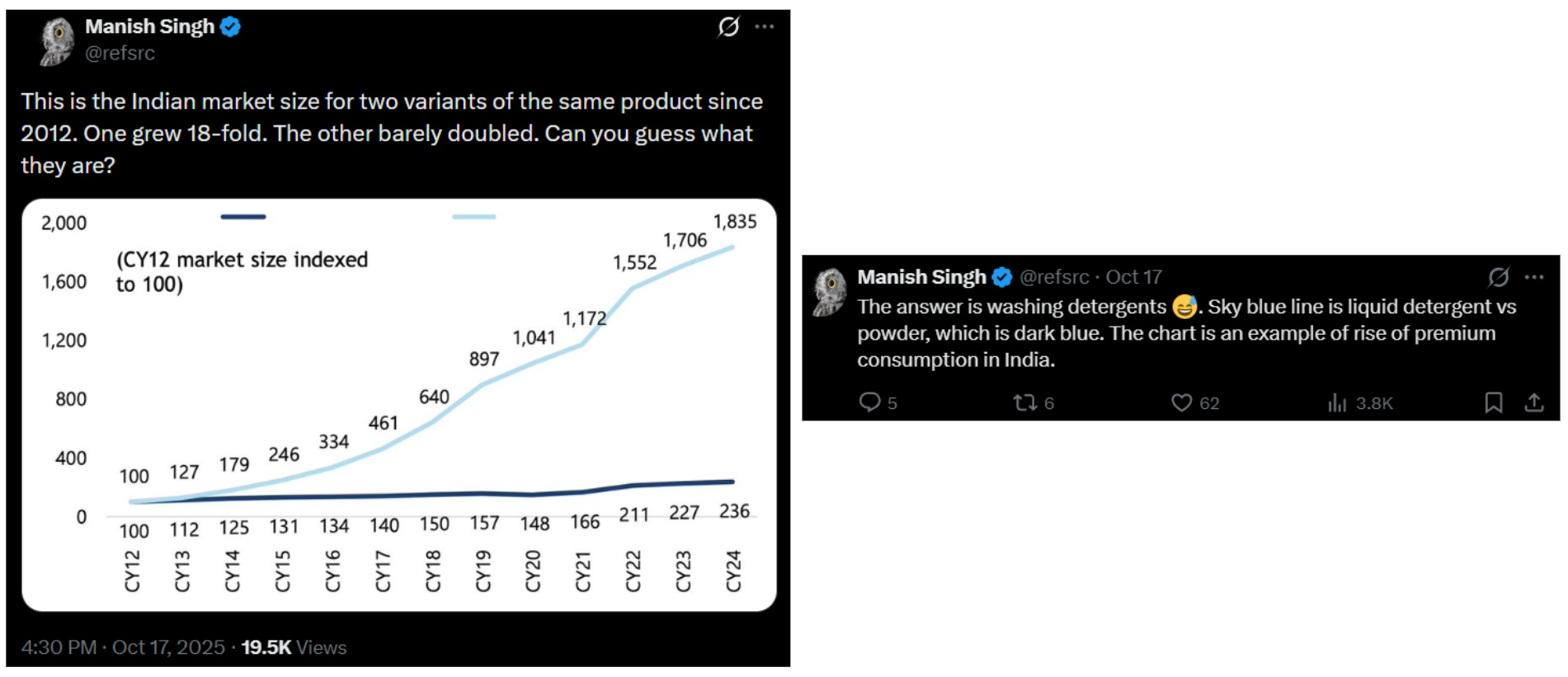
With a large, digitally-native consumer base that is rapidly becoming affluent, India, in its coming decade provides arguably the most opportunities for creating large consumer companies. Premiumisation is here to stay and consumers have proven a strong demand for convenience.
For this year-end edition of Sauce Pantry, we look back at the key trends that shaped consumer brands in 2025, and map the ones that are likely to stay in the coming year as well.
Let’s press rewind⏪
Indian consumer behaviour overwhelmingly mimicked the US (and not China):
While superapps built giants in China, the same hasn’t happened in India. In contrast, India has become fertile ground for focused, category-led D2C brands, spanning everyday staples and protein to sexual wellness and even luggage that speak directly to young consumer identity and aspiration.
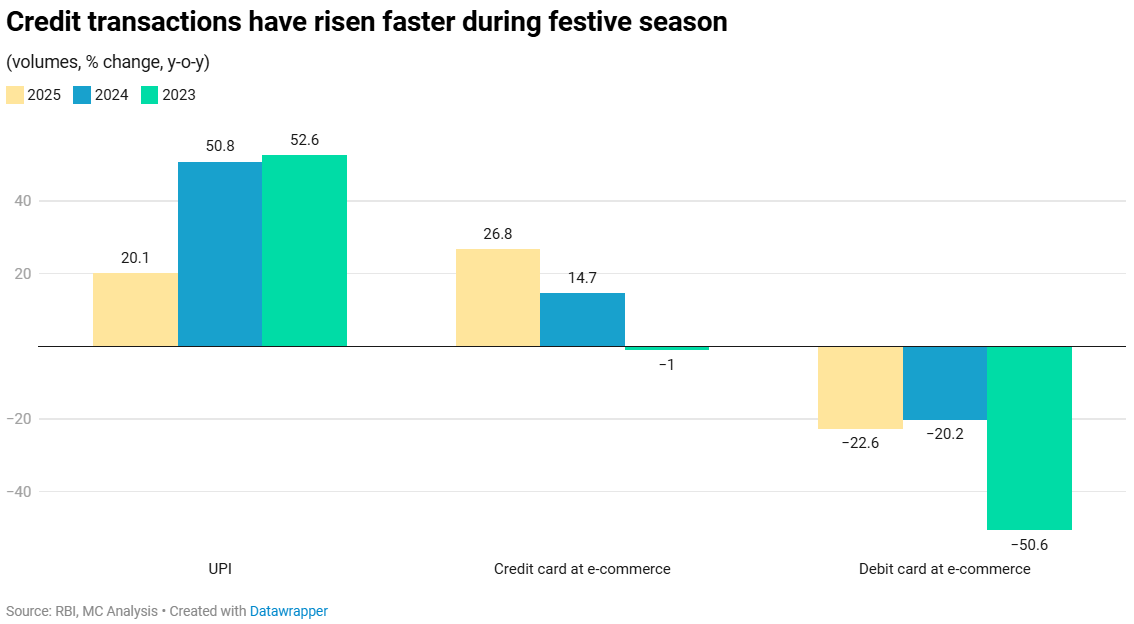
At the same time, India’s household saving rate has declined as consumption has accelerated and household debt risen. As witnessed in the US, credit is no longer peripheral to spending, it’s becoming central. This Diwali, credit card spends on e-commerce platforms grew faster than UPI, both in volume and value, signaling a shift toward higher-ticket, credit-backed purchases. That shift is even more visible in the rise of EMIs: large expenses that were once deferred are now commonly financed, with an estimated ~70% of iPhones in India being bought on EMI.
Together, these trends point to a consumer who is spending more, financing more, and increasingly comfortable buying into aspiration upfront, rather than saving towards it and delaying their purchase. For brands, it is imperative to understand and incorporate flexible financing options into the purchase journey, depending on the category.
The ‘Quick India Movement’ deepened:
The reason why QComm structurally works in India is clear now: Low labour costs compared to GOV coupled with a high population density, especially as a major portion of the consuming class resides in few densely populated cities.
Knowing your channels is very important for any brand, it’s almost as important as knowing your customer. QComm isn’t a one-size-fits all solution and is still mainly a Tier-1 channel. The over indexation of Tier-1 cities is even more pronounced in vertical QComm categories like fashion, baby/kids and quick services.
The implication is clear, QComm is powerful only in the right context: when your TG, brand and economics align. When they don’t, it bleeds the brand. QComm should be used selectively and not as a universal default channel for new brands.
Bharat became a focus:
Brands building for Bharat face a different conundrum as the aspirations are quickly converging with urban Tier-1 India. Serving Bharat has become less of a demand problem and more of a logistics and distribution problem. It remains the hardest and most important piece of the puzzle to solve.
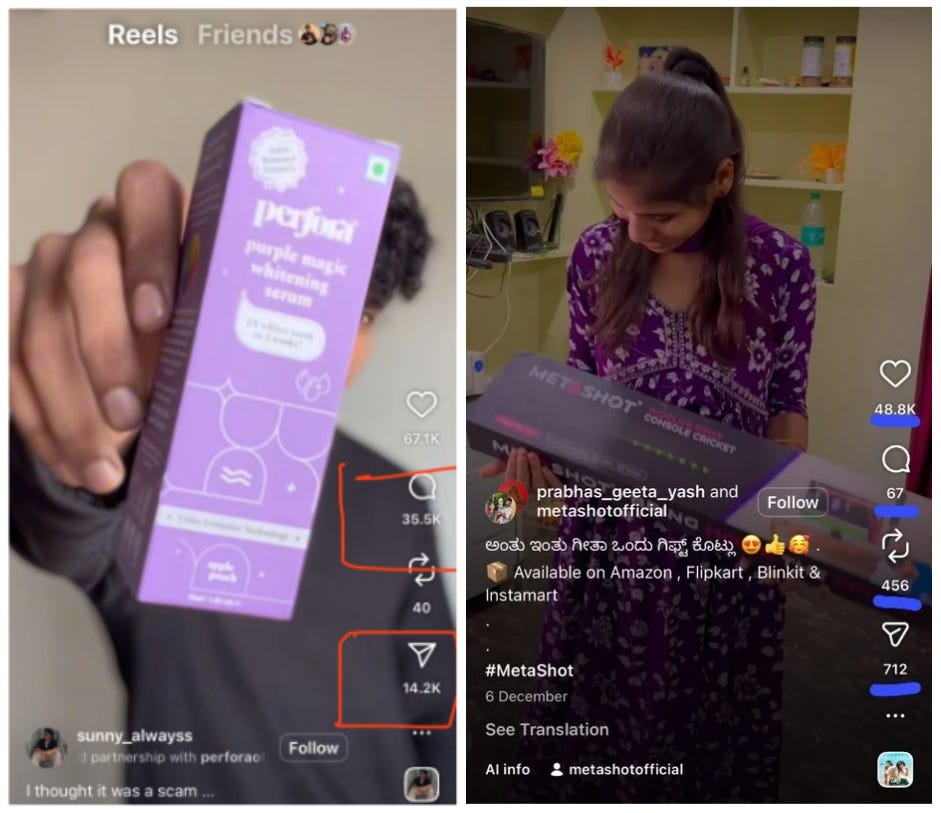
A strong macro trend observed is the move from unorganised to organised, brand led commerce in key categories that enjoy great depth and early adoption like BPC, appliances and regional F&B. As these categories formalise brands are exploring new ways to reach customers. Regional or vernacular influencer collabs often prove to be more fruitful than collabs with larger influencers. Our portfolio companies Perfora & MetaShot have seen encouraging early metrics including higher ROAS & Hook rates with this strategy.
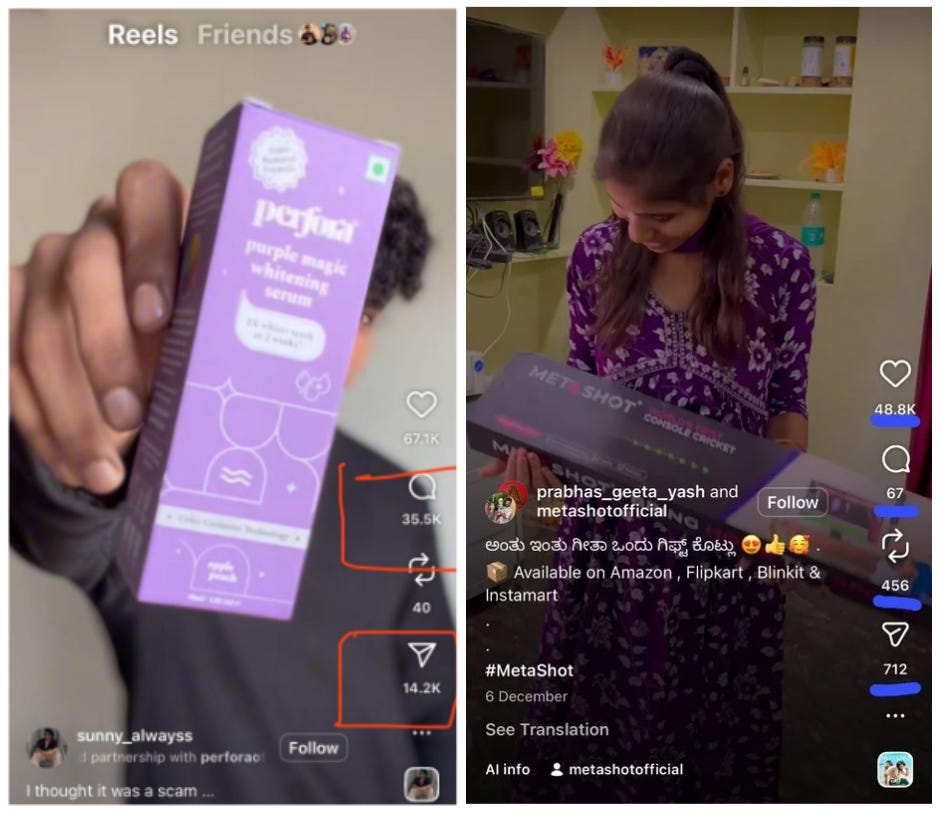
Posts with ~25M & 2M views respectively Discovery routes changed:
Generative Engine Optimisation (GEO) became a no-brainer for new-age brands in 2025. The SEO equivalent in the AI agent paradigm, GEO is the way brands make themselves more relevant and visible to consumers through the generative AI platforms they use. With more and more users depending on ChatGPT, Perplexity, Claude or others for everyday recommendations, and is something new founders should consider from Day 0.
In fashion for example, AI-led product discovery is emerging as a powerful medium, where conventionally choice overload and slow discovery are core friction points. Platforms such as Shoppin’, Alle, and Alt are rethinking commerce not as search-led, but rather as context-led, using intent, and behavioural signals to surface what’s relevant and in-style. This is a far more delightful experience compared to forcing consumers to navigate infinite catalogues. These models flip discovery into a curated experience, using AI to reduce friction and increase conversion.

Shoppin’ positions itself as ‘a shoppable Pinterest’ - indicating an easy, curated experience Brands continued to increase AI tooling:
Instead of relying on lagging indicators, brands are increasingly utilising AI tools that analyse search behaviour, social sentiment, creator content and intent signals to predict what customers want. This allows brands to move their decision making upstream, helping them prioritise formats, ingredients, claims and product ideas quickly. This shortens iteration cycles and helps brands deploy capital more efficiently.
BPC brands are already applying this in practice, with platforms like Spate AI (mines search and social sentiment data to surface emerging trends around ingredients, formats and routines well before they emerge as hot spaces) and Flickly (rapid polling platform with quick turnaround time).
AI tooling has extended to quick commerce as well. Tools such as GobbleCube and 1digitalstack help brands figure out where quick commerce actually works for them. By layering local demand signals, order frequency, basket behaviour and fulfilment constraints, these platforms identify SKU-City-Time combinations where speed creates incremental value. This enables brands to shift their QComm channel from speculation to data-backed execution, saving both time and capital. We’re likely to see more enablement tools being built in 2026 and new-age Founders building these capabilities earlier in their brand journey.
Gen Z shifted strongly to Convenience-first, Time-conscious over Value-conscious behaviour:
As discretionary incomes rise for younger consumers, free personal time is becoming increasingly scarce, making convenience a more valuable currency than price.
This young cohort is growing up in an environment of instant access, on-demand content, quick commerce, same-day services and is far less willing to trade time or effort for marginal savings.
Instead, they optimise for speed, simplicity, and reduced cognitive load. Whether it’s paying extra for faster delivery, choosing curated over exhaustive choices while shopping, or preferring services that compress discovery and decision-making. Gen-Z is signalling a clear willingness to pay for frictionless experiences.
Over time, this shift compounds in favour of brands and platforms that are built around ease, immediacy, and reliability rather than lowest cost. As time scarcity deepens and incomes continue to rise, convenience is moving from a feature to a default expectation that founders need to consider strongly.
It’s now cool to be fit:
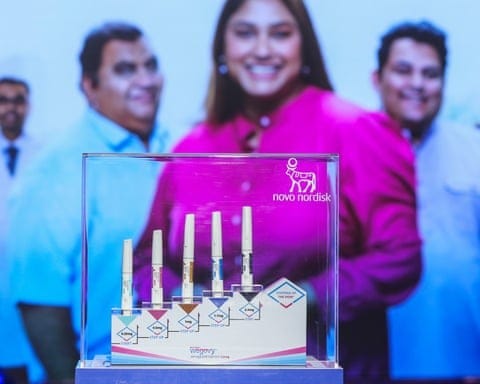
The 1st & 2nd order effects of GLP-1 drugs’ imminent wide-scale adoption in India are understated and wide-reaching. They are bound to have multiple strong consumer behavior shifts in food and health and are likely to affect multiple adjacent subspaces. And there are overwhelming signs of early adoption as well, with Mounjaro recording a Rs. 100 Cr+ topline in India in the month of October, becoming the highest selling drug, even ahead of Augmentin (an inexpensive everyday antibiotic).
For global context, In the US where ~12% of adults have used GLP-1 drugs for weight loss, protein-first, low calorie, clean food brands like David ($85M raised, $100M+ topline in its first year), Chobani ($20B valuation, ~$4B topline FY26E), Perfect Day (~$850M raised) provide a strong precedent for India’s highly protein deficient demographic which is rapidly premiumising.
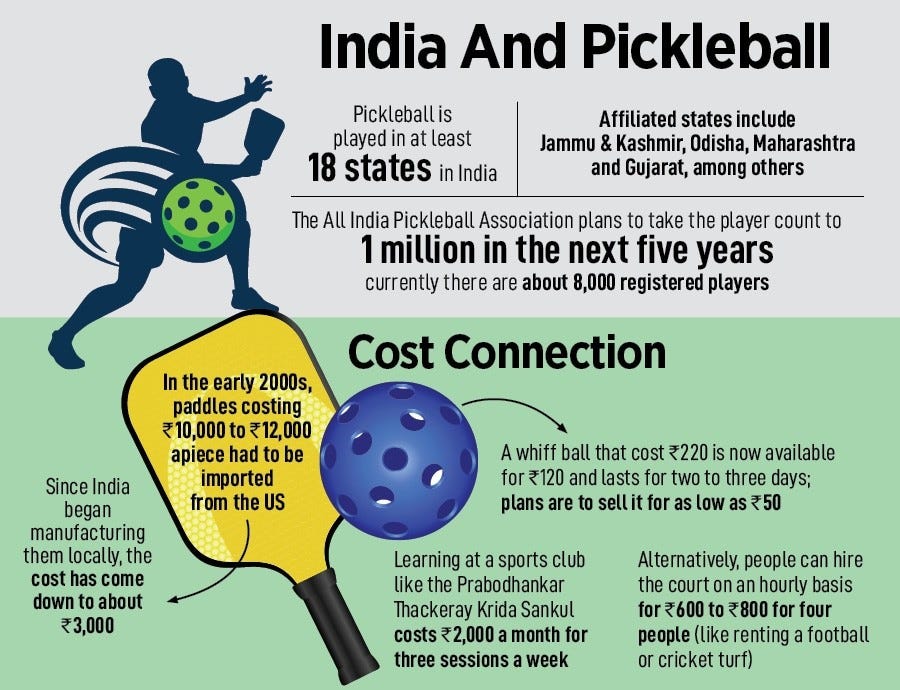
The rise of individuals utilising sports as not only a means to exercise but to also socialise is further accelerating the fitness trend. The rise of sports like Padel, Pickleball and IPs like run-clubs and Hyrox, exhibits that young India wants to get fit together while having fun.
The proliferation of vertical quick commerce for high-quality F&V and staples (FirstClub, Handpick’d, 4amfresh etc.) shows a very strong consumer behaviour shift in Urban India towards convenience, premiumisation, curation and quality. Sports, nutrition and health-first positioning for lifestyle brands are key areas likely to flourish in 2026 too.
The ’Going Out’/ Experience Economy continued to flourish:
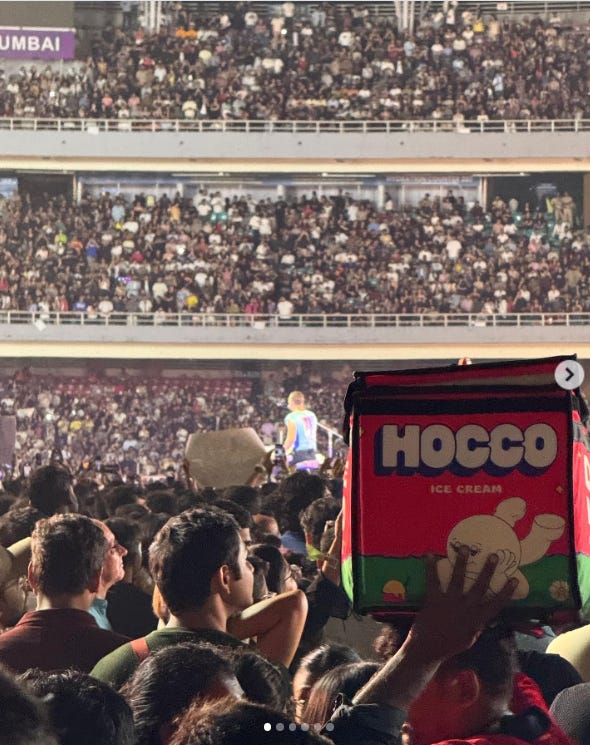
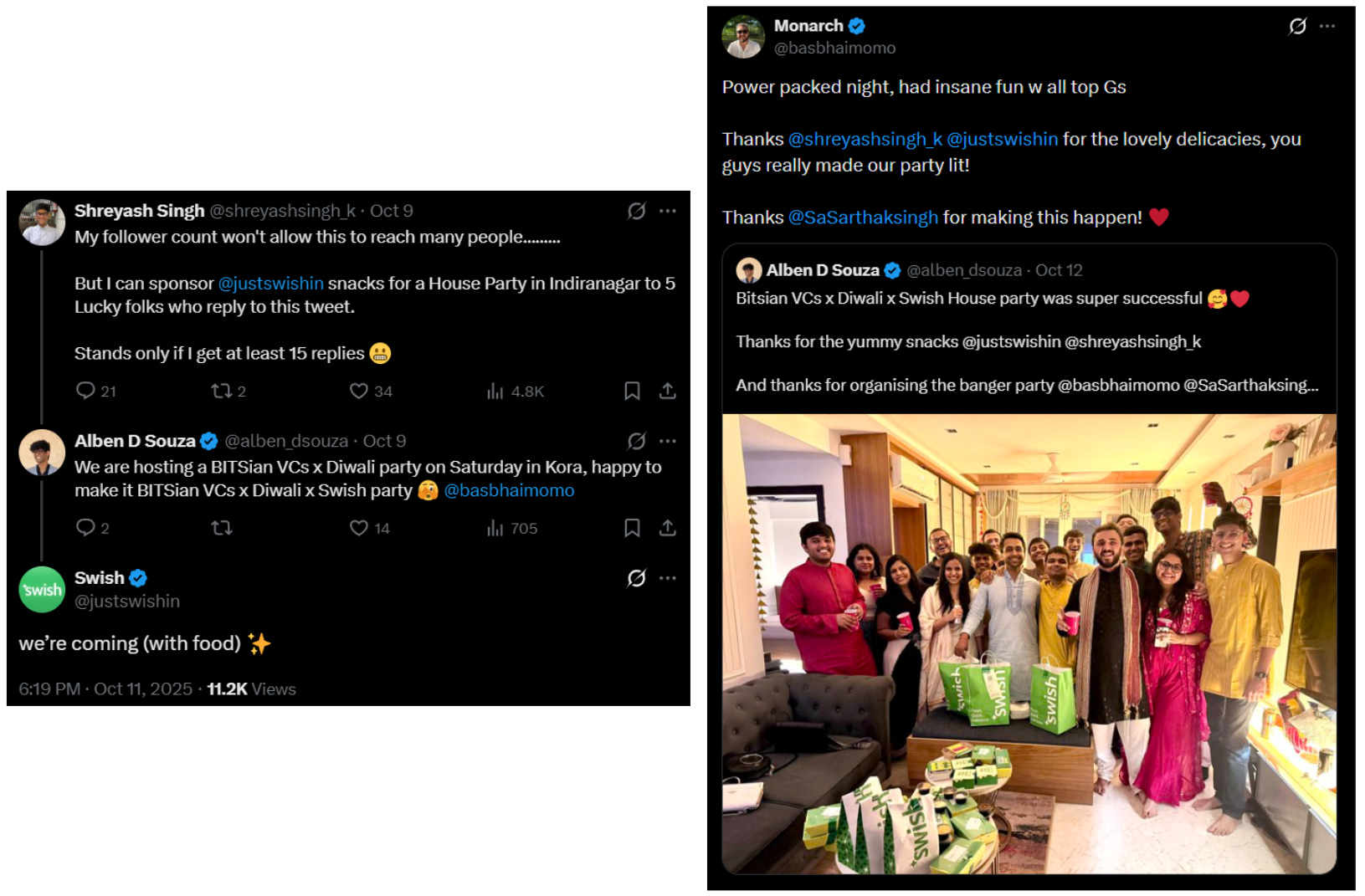
Indians don’t just want to socialise over drinks or meals anymore, they increasingly want to do. They want activities and experiences that forge memories, from the rise of concerts with global bands and singers putting up large scale IPs that get sold out in minutes to sports, premium flea markets, fake weddings and even midnight cycling or ghost walks, they increasingly want differentiated experiences.
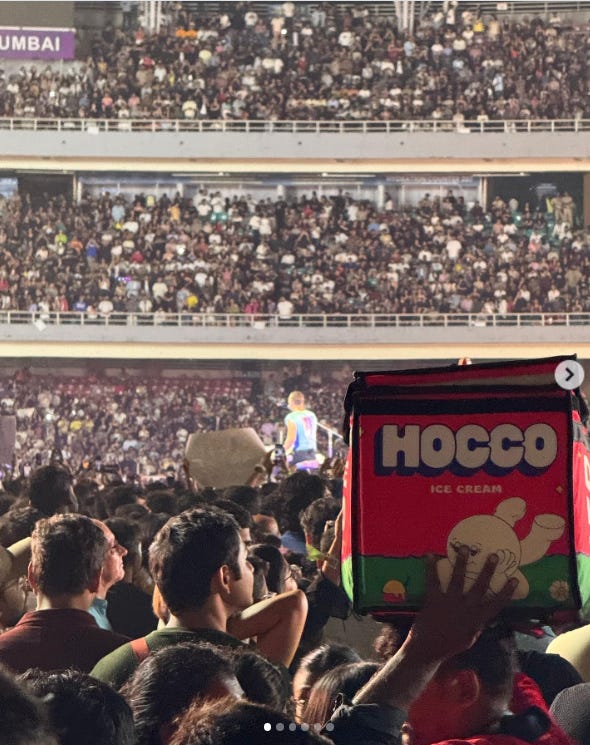
What this means for brands is new potential distribution avenues, sponsorships, themed events. Take a look at our portfolio company Hocco at the Coldplay concert, where we got messages from family and friends saying they tried out new products at the concert and absolutely loved them. A great way to reach high-income young consumers especially at a place they’re going to remember for a long time. We see the experience economy continuing to explode in 2026 and is likely to be a major leverage for brands.


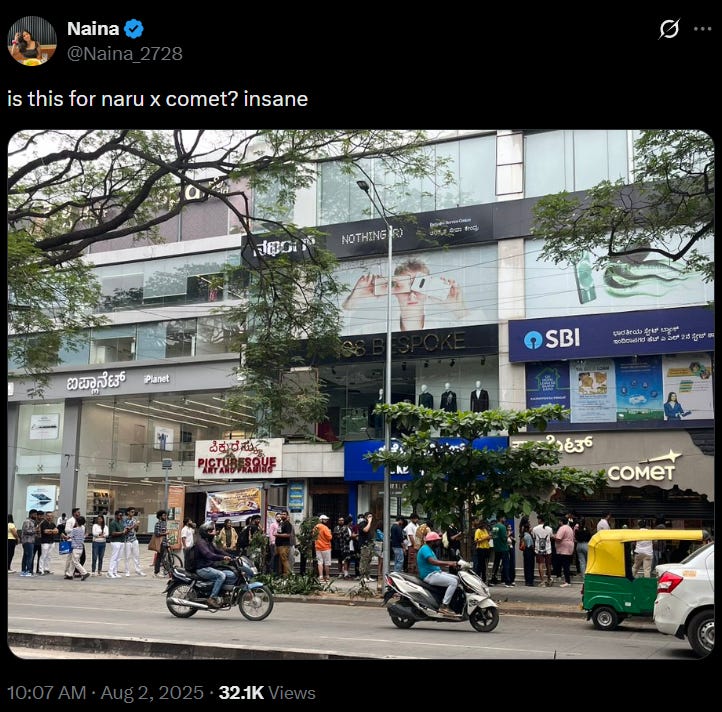
Authentic brand collaborations drew a lot of attention:
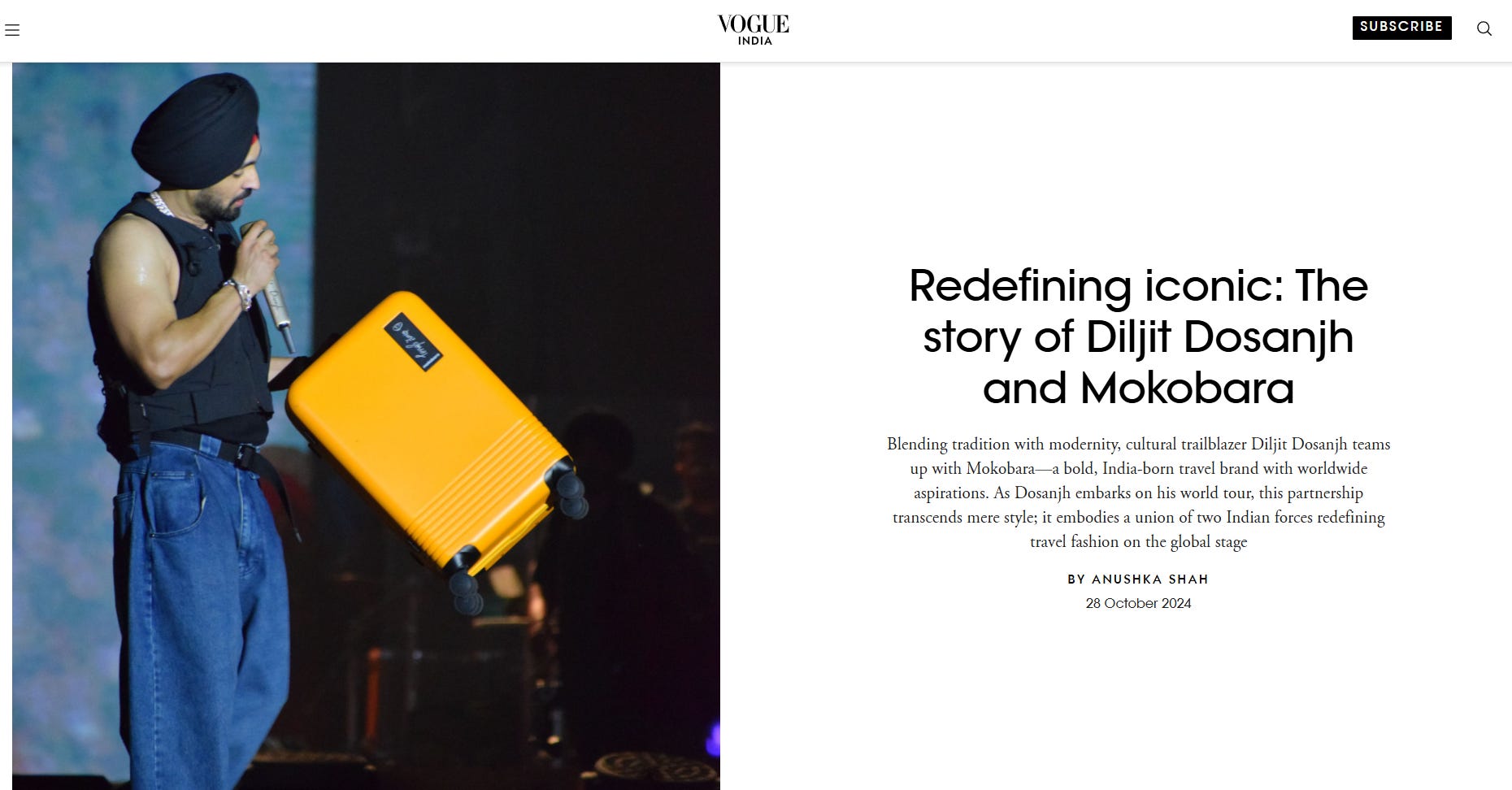
Looking at our own portfolio, at Mokobara we’ve seen great success with our Diljit Dosanjh x Mokobara collaboration.
Young consumers want brand collaborations they can relate to, something that makes them feel heard and understood. Authentic, thoughtful brand collaborations will continue to engage consumers in 2026.
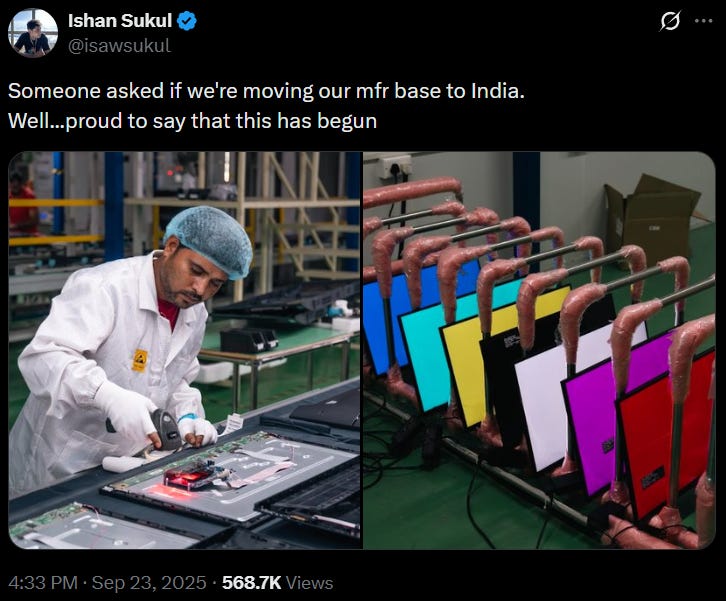
Manufacturing got more localised:
Brands are increasingly localising parts of their manufacturing stack, driven by a confluence of regulatory and economic tailwinds. The rollout of new BIS standards, varying by category, is nudging brands toward domestic production, while the improving unit economics of localising specific manufacturing processes are making this shift commercially viable rather than just compliant.
This is further reinforced by the rising pace of new founders and funding in DeepTech and manufacturing-led startups, which help expand existing capabilities within the Indian ecosystem. Together, these forces are lowering the barriers to build locally without compromising on quality or scale.
We expect this trend to continue to deepen across our broader portfolio across categories through 2026, and expect more builders to start thinking locally.
As a formative year wraps up, we look forward to seeing how founders, builders and operators execute their visions for new India’s consumption in 2026.
A Very Happy New Year from Team Sauce!
 | A guest post by
|